Guides
The things people ask us before they order.
Three answers we give often enough to write down properly. None of it is a sales pitch — it is what we would tell a friend who asked us across a kitchen table.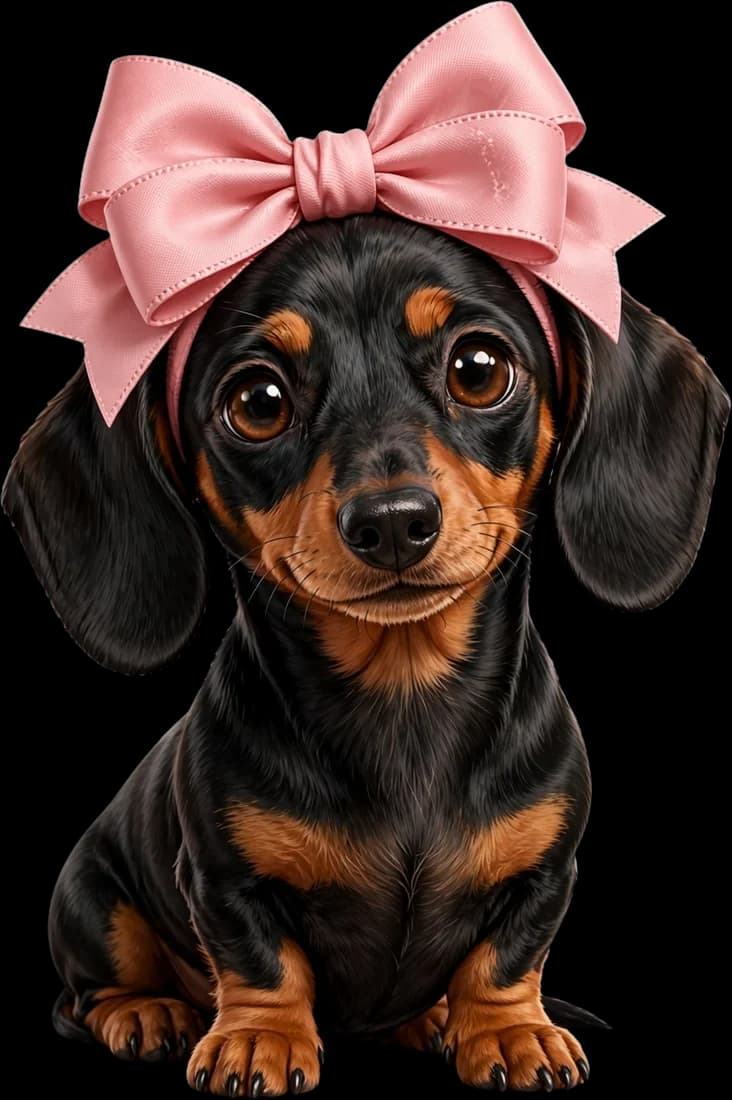
How to choose a photograph for a pet portrait
A portrait is only ever as good as the photograph underneath it. That is not a disclaimer — it is the one part of the result you control completely, and it is worth ten minutes.
Daylight does almost all of the work
A dog photographed near a window, turned side-on to the light, comes out with visible eyes, a nose that reads as wet, and a coat that separates from the background. A camera flash undoes all three at once: it flattens the muzzle, throws a hard shadow onto the wall behind, and turns two brown eyes into two green discs.
Get lower, and closer than feels natural
A phone lens is wide. A dog photographed from standing height, at the distance you would normally stand, ends up small in the middle of the frame and stretched at the edges. Kneel down to their eye line and let the dog fill most of the picture. For a dachshund this usually means lying on the floor, which they will interpret as an invitation.
Tap the eyes, and send the original file
Tapping the screen on the eyes before you take the picture is the difference between a sharp face and a sharp collar. Then send the photograph itself rather than a screenshot of it, and from the place it was taken rather than out of a group chat — messaging apps re-compress a picture every time it is forwarded, so what finally arrives can be a fraction of what you shot.
Black-and-tan coats need more light than any other colour
This is the one we care about most, because it is the one that goes wrong. A black-and-tan coat is mostly black, and black is where cheap printing gives up — the shoulder, the back and the ear collapse into one flat shape and the dog stops looking like your dog. Look at your photograph and ask whether you can see where the shoulder ends and the back begins. If you can see it, so can we. If you cannot, take another one nearer the window.
One dog, and nothing drawn on top
One dog per photograph for the launch pieces. No filters, no stickers, no text over them: a filter is somebody else's decision about colour, and the first thing we would have to do is undo it.
The short version
- One dog per photograph for the launch products.
- Good light — a window beats a flash.
- The whole dog in frame, in focus, eyes visible.
- At least 1000 pixels on the long edge.
- No heavy filters, stickers, or text over the dog.
The same five requirements the personalization page lists — one source, so they cannot drift apart.
How personalization works, step by stepHow to choose a personalized pet gift
“Personalized” is an easy word to print and a hard one to mean. Five questions worth asking about any personalized gift, from any shop, including this one.
What exactly gets personalized? A name printed under a stock drawing is not a portrait, and a portrait drawn from your photograph is not the same as your photograph reproduced. These are three different products and they are frequently described with the same word.
Who looks at what you typed, and when? A personalized order can be printed perfectly and still be wrong, because the mistake was made at the keyboard rather than at the printer — and a name is spelled once.
Can it be changed after ordering, and up to what moment? “Made to order” and “already in production” are not the same day.
Is production time quoted separately from shipping time? They are two different clocks and they are very often added together into one comfortable-sounding number.
What happens if the photograph turns out to be unusable? Ask before you pay. The answer, or the absence of one, tells you most of what you need to know.
Ours are on the personalization page and in Help. Not every one of them: where an answer depends on something we have not finished setting up, those pages leave the space empty rather than fill it with a confident guess. That is what an empty space means here — not that we forgot, and not that the answer is bad.
Read our answersHow long a made-to-order piece takes
Two different clocks, routinely quoted as one number.
- Production
- The time between your order and a finished piece. Almost every SalchiLuna product is made after somebody orders it — for those there is no shelf it comes off, and nothing sits in a box waiting. The few batch-made pieces say so on their own pages. That is the trade you are making for a piece with your own dog on it.
- Transit
- The time between a finished piece and your door. That one belongs to a carrier rather than to us, which is why you will not find a delivery date anywhere on this site: we would be inventing it.
- Where the real number lives
- The current make-and-ship window is printed on every product page before you pay, and answered again in Help and in the shipping policy. It covers production and dispatch — the part of the journey that is ours — and nothing on this site adds a transit guess on top of it.
Ordering for a particular date? Write to us before you order rather than after — we would rather talk you out of a date we cannot meet than miss it.
Delivery and orders, in Help